We speak to a ton of owners whose facility is still under construction. The lease is signed, permits are moving, and opening is only a few months out.
While the build-out and managing logistics is important, most of these people reach out with pricing still undecided, no firm list of services, and in some cases, no settled view of what kind of business model they'll be running. The booking side comes even later.
But we’d make the argument that it deserves earlier consideration, and the reason is the opening date itself. In our experience almost nobody opens on the day they first planned to. Inspections get rescheduled, materials ship late, and the date moves. So does everything you've scheduled around it, from hiring to your opening marketing push.
Selling is the one thing that doesn't have to wait. Memberships, packages and founding-member offers don't need a finished building and they don't carry a date, so an inspection that slips two weeks doesn't cost you revenue.
Start selling earlier and opening week looks different: founding members signed up, packages already paid for, and a list of people waiting for the calendar to go live. None of that needs a finished facility, it just needs a page people can purchase and pay on.
Your Booking Page is a Pre-launch Asset
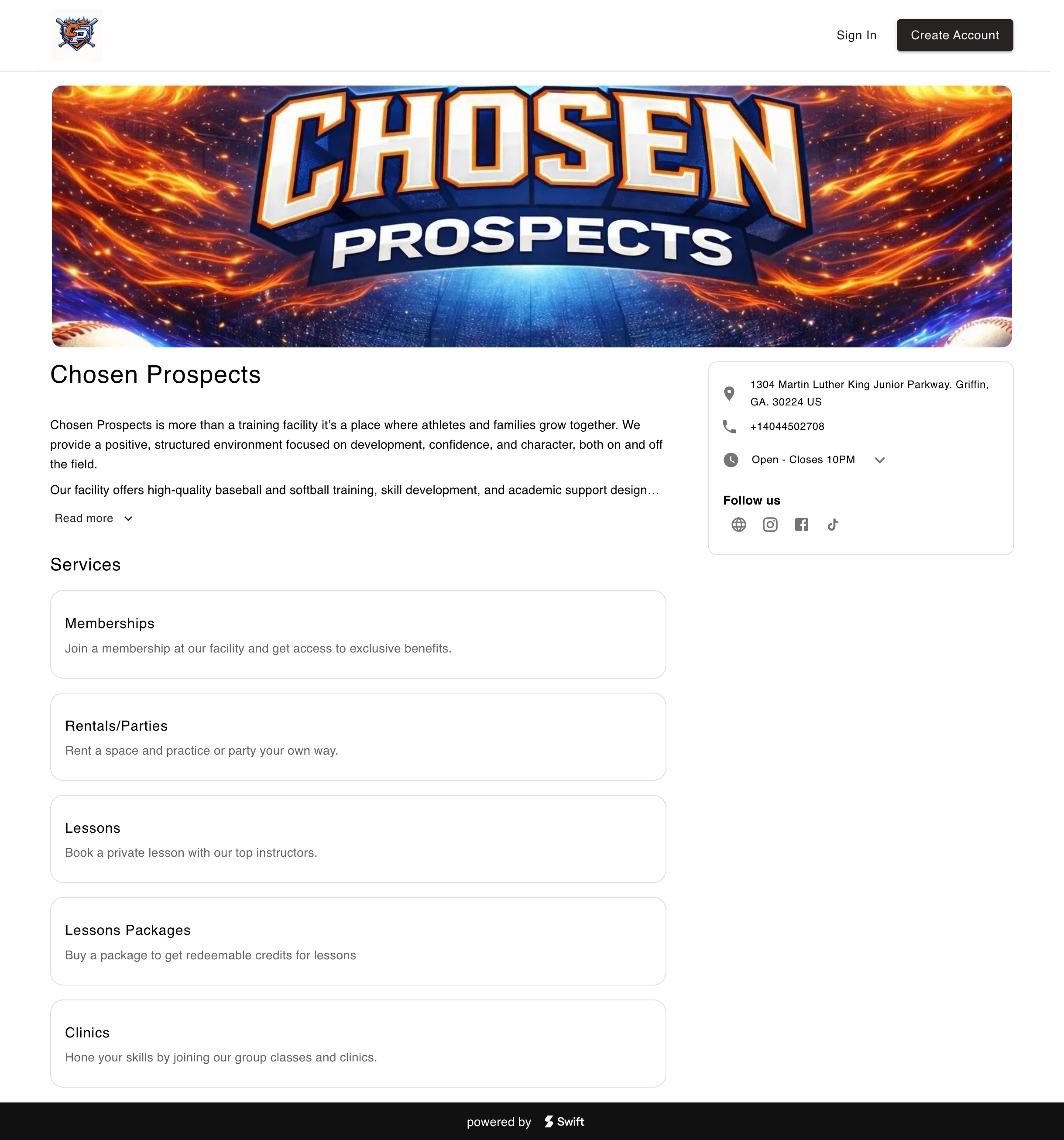
Your calendar can be live before the turf is rolled out. A booking page you publish early does two jobs: before your opening date is locked in, you can sell things like memberships or packages which aren’t tied to a specific day . Once the date is firm, the same page hosts the calendar people book opening weekend on.
A freeze on your booking calendar is what lets one page do both. You can build the whole thing out — services, prices, hours — and stop anything dated from being booked until your opening date is decided. The page is live and people can buy, but nobody ends up holding a 6pm cage reservation for a Tuesday you're still not open.
What Has to Be True Before You Can Take a Dollar
Four things have to be true before you can take money: payment processing, a signed waiver, pricing, and sales tax. Two of them depend on somebody other than you, so start there.
Do you need a live website before Stripe will approve your account?
You need at least one live page. Stripe asks for your website URL when you verify your business, and we've had a facility's verification held up because there was no site to point at yet. Something as simple as a booking page can serve that purpose. With Swift you’ll get one out of the box, so this isn't something you wait on until your custom website is built, or even figured out. It also gives you somewhere to start building an email marketing list before you open.
The waiver, pricing, and sales tax
Your waiver should get a look from your insurer or attorney before you use it. If you want a starting point, we publish a free injury liability waiver template.
The other two you can settle yourself:
- Pricing for memberships, rentals and lessons. You can't pre-sell what you haven't priced. Take a look at our facility pricing guide if you need some place to start.
- Sales tax for your state and county. Whether your services are taxable isn't something you want to find out after you've already collected 40 memberships.
What Can You Sell Before Your Facility Opens?
Once you can take payment, consider offering the following to your customers in this order:
Founder or early-bird memberships, packages, and credits. These carry value and aren’t affected by the date your facility officially opens its doors. A parent of two can only apply batting cage credits to rental slots once you open them up, but you’ve already collected the money up front. The early-bird membership works especially well. Customers who opt-in get exclusive discounts in exchange for signing up before the doors open. We provide more information in this article breaking down different types of membership models for sports facilities.
Cage or court rentals, lessons, camps, and classes. Lift the booking freeze and open the calendar. This only happens once your grand opening is locked in, a delayed inspection turns dated bookings into refunds, and that’s an expensive way to meet your first hundred customers.
Worth considering: block time for local teams and organizations. A number of pre-launch facilities lock in long stretches of practice time with travel organizations before they open — a winter club taking a weeknight slot for two or three months, for example. It's not a fit for every facility, but if you already know an organization that needs space, it's the single fastest way to get real hours on the calendar. The usual approach is to give those groups the prime hours, weeknight evenings and weekends, where the rate per hour is higher, and sell the remaining time to the public.
You can check out our guide on maximizing your indoor sports facilities profitability if you’re looking for more ideas.
Who Can You Sell to Before You Open?
Whoever already knows you from the sport rather than the facility you’re trying to open. It's worth an evening working out who's actually on that list, because it's where your first customers can come from.
If you've been coaching, you have a roster and a group of parents who already trust you and pay you for something. Plus you can reach them without spending a dollar on ads.
If that's not your background, it takes more digging:
- Are you renting space somewhere now? Those athletes and families already know who you are and that you care about the sport.
- Are there any local clubs, travel organizations, leagues or schools that are short on space?
- Who else works with a similar customer base — trainers, physical therapists, team dealers, tournament organizers? Consider reaching out and proposing a partnership.
- Is there a parent group, league board, or team chat you're already part of?
- Do you have a partner or investor with their own network?
Whatever comes out of that exercise is your first outreach list. You can also put a “get updates” signup on your website, so you can reach people directly when your memberships launch or you have a firm opening date.
Get the Calendar Ready Before You Open
Once your opening date is firm, the calendar can open. Three things are worth setting up before opening weekend:
- Load instructor availability so lessons are bookable on day one instead of week three. If you're still hiring, our guide to hiring instructors covers what to look for.
- Give your founding members priority access. Letting members book further ahead than the public is a benefit you can run permanently, not just at launch, and it makes founding membership worth something in February as well as on opening day.
- Put something in the quieter hours. Weekday mornings and early afternoons tend to be the toughest slots to sell, and this can continue well into your opening months as well. Intro clinics, open cage hours and beginner classes are all worth getting on the calendar early. We've written more on off-peak revenue if you want ideas.
How Swift Handles This
Most of the facilities that onboard with us haven't opened yet, so this is a setup we run all the time.
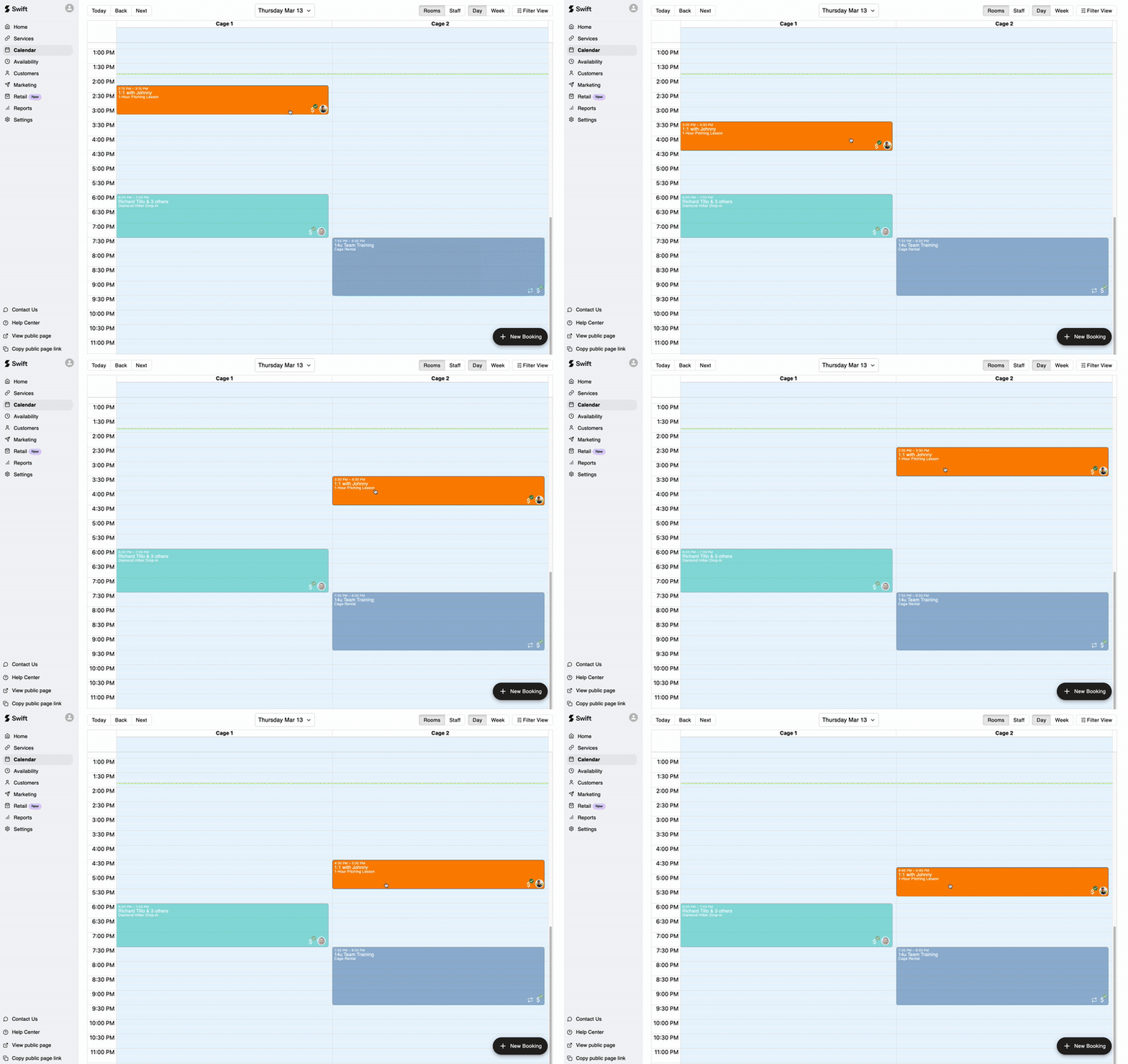
In practice, Swift lets you build out your spaces, services and hours and publish a booking page while the building is still going up. The drag-and-drop calendar shows what's actually available and lets you block long stretches for a team or organization in one go. We'll set the freeze to your launch date so nothing gets booked before you open, get your early-bird memberships and packages selling with a coupon, and set the extended booking window so members are ahead of the public once the calendar opens. We'll also walk you through Stripe verification and get your waiver attached to bookings.
How Long Before Opening Should you Set Up Booking Software?
We recommend four to six weeks before you open. Setup isn't what takes the time. Most facilities onboard with us in a few hours, not the weeks it can take with other software. The four to six weeks is for getting familiar with the system, adding your staff, and starting to pre-sell your first memberships before the doors open.
The whole sequence, in order:
- Before you can take a dollar: pricing decided, payment processor verified, waiver in place, sales tax answered, one page of your website live.
- As soon as that clears, sell undated: founding memberships, packages, credits.
- Once your opening date is firm: load instructor availability, then lift the freeze — founding members first, public after.
- Opening week: opening weekend bookable, quieter hours filled with clinics, classes, or open cage time.
Only the last two steps need an opening date. Everything before them — including the part where you start collecting revenue — you can do while the building is still going up.
If you'd like to see what this looks like for your facility, book a free demo and we'll walk you through it.
Frequently Asked Questions
Can you sell memberships before your facility opens?
Yes. Anything that doesn't carry a date. Memberships, packages, credits can be sold and paid for before the building is finished. Dated bookings like rentals, lessons and camps have to wait until your opening date is firm.
What happens if your opening date moves after you've already sold memberships?
Nothing, if what you sold doesn't carry a date. Memberships, packages and credits aren't tied to a specific day, so a two-week delay costs you nothing. Dated bookings would become refunds.
Do you need a live website before Stripe will approve your account?
You need at least one live page. Stripe asks for your website URL during business verification, and an account can be held up if there's nothing to point at. It doesn't have to be a finished site.
Are sports facility memberships and rentals subject to sales tax?
It depends on your state and county, and can differ by service. A membership, cage rental or private lesson aren't always treated the same. Confirm with your state's department of revenue before you start selling.
How far in advance should you set up your booking software?
Four to six weeks before opening is a good target. The setup itself is quick, normally just a few hours. The rest of the time goes into getting comfortable with the system, adding your staff, and pre-selling.