Membership pricing might not be the first thing you think about when opening a baseball facility, but it should be near the top of your list.
Your membership model, pricing, and the cost of your services don’t just affect revenue. They influence how members interact with your space, how full your schedule becomes, and how consistent your cash flow is month to month.
At Swift, we’ve seen hundreds of baseball facilities take different approaches to pricing. Most successful models fall into one of two categories: Discount-Based or Credit-Based.
Here’s a quick breakdown of each and what to consider when choosing the right fit for your facility.
Discount-Based Memberships
Discount-based memberships are built on straightforward tiers. Members pay a low-to-medium flat monthly fee and get automatic percentage-based or flat-rate discounts on services like lessons, cage rentals, or drop-in classes.
Why do facilities choose discount-based memberships?
- Simple: Low commitment and minimal barrier to entry
- Transparent: Easy to explain the value and market to new customers
- Flexible: Members book on their own terms with fewer restrictions
If your goal is to attract more customers and keep your services flexible, discount-based memberships are a great model to start with. They drive volume and lower the barrier to entry for new members; however, most revenue will still come from individual bookings, making your revenue less predictable, especially in slower months. And if availability becomes scarce, members may question the value of their monthly membership.
Credit-Based Memberships
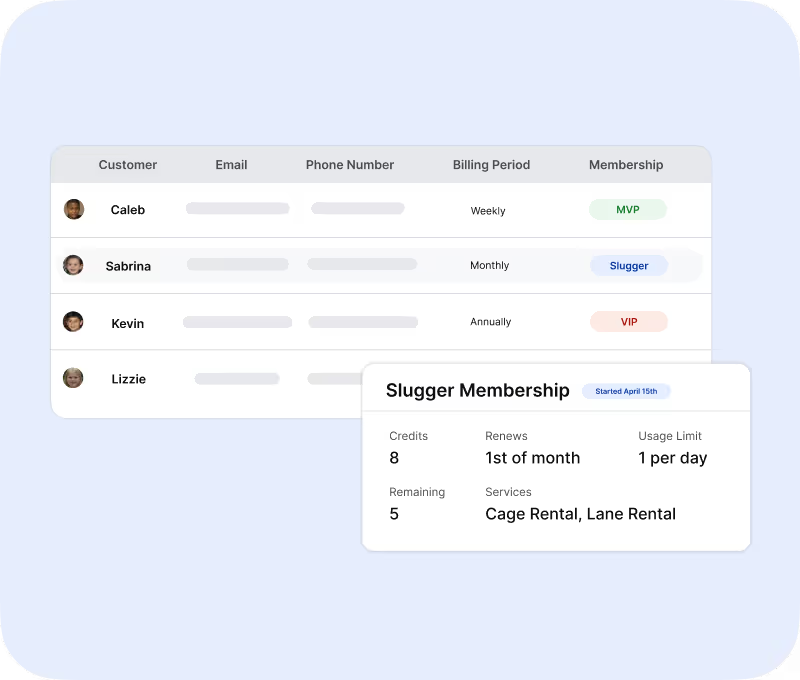
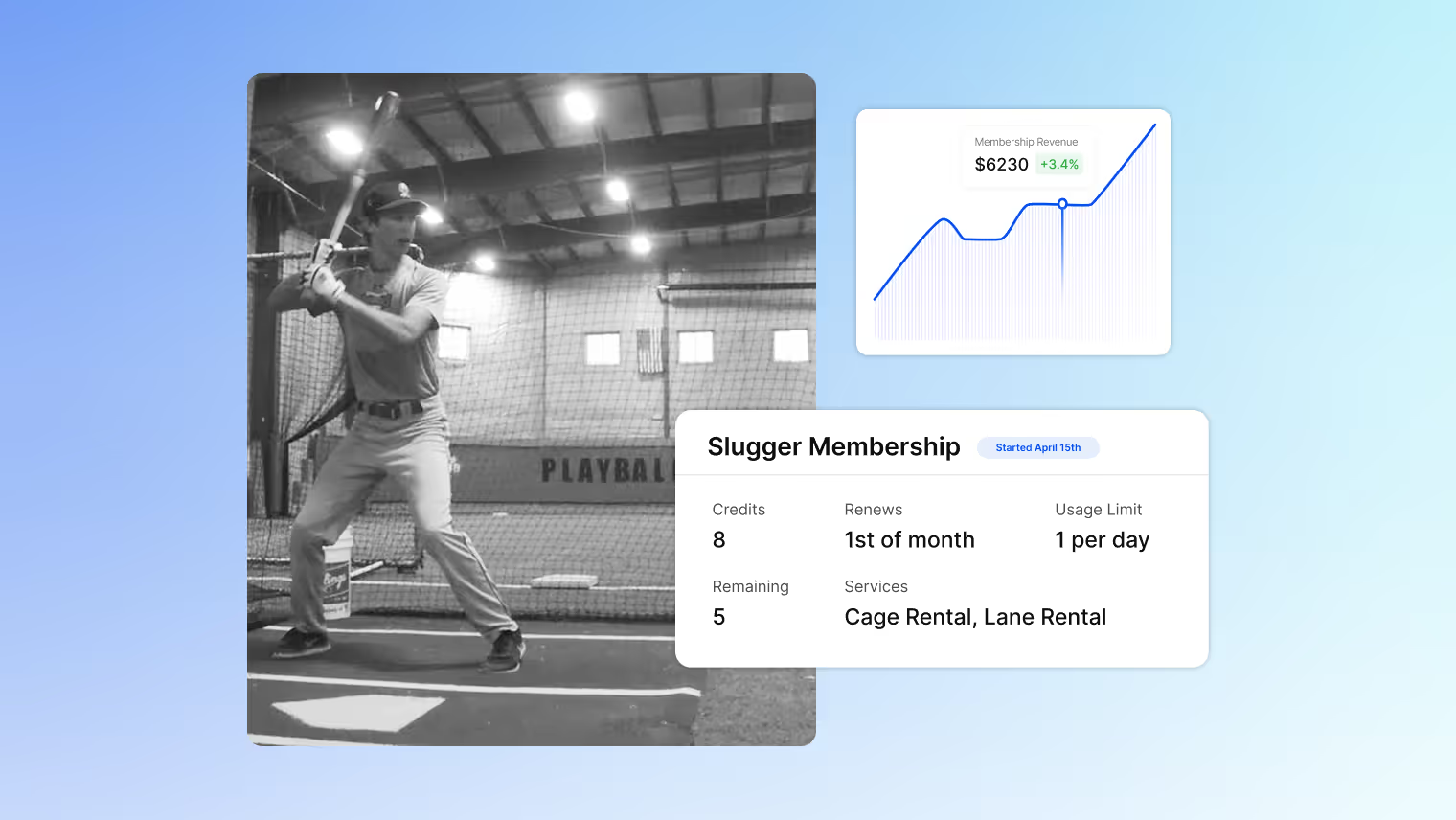
Credit-based memberships give members a set number of monthly credits, tied to their membership level. Credits can be limited by service type or by time of use.
What does a credit-based membership look like in practice?
A Silver member might get 15 cage rental credits and 2 lesson credits per month. At the high end, some facilities offer "unlimited" memberships, which are great for daily athletes but intimidating for new members.
Why do facilities choose credit-based memberships?
- Predictable: High amount of recurring revenue
- Structured: Built-in capacity management through credit limits
- Consistent: Encourages regular member engagement
While this model takes a bit more effort to explain, it often leads to stronger retention and member loyalty. It's best suited for facilities that want to automate operations and scale high-tier memberships. It pairs well with tools like 24/7 access control for premium members.
Already at capacity? Explore other revenue streams like holiday camps or HitTrax leagues to maximize revenue in off-peak hours.
How Do You Choose Between Credit-Based and Discount-Based Memberships?
Start with how predictable you need your revenue to be: credits make income forecastable, discounts make it volume-driven. For a baseball facility, three things decide it:
- Revenue Stability: If you need consistent, forecastable income, credit-based might be a better fit.
- Customer Type: Want to reach more casual users or newer players? Discount-based will likely appeal more.
- Your Involvement: Credit-based structures are easier to automate, especially with the right software in place.
[[image-CTA]]
Your facility may also benefit from a hybrid approach. For example, you could use credits for core services like cage time, while offering small discounts on new programs like classes to encourage early adoption.
After working with hundreds of sports facilities at Swift and managing my own high-performance baseball facility, the best advice I can offer is this: Keep your pricing fluid.
As coaches, we love the game. But to succeed long-term, we need to be just as invested in the business. Set aside time each quarter to:
- Review pricing
- Run sales and revenue reports
- Analyze membership retention
- Evaluate whether your structure still aligns with your goals
Need Some Help? Get the Full Guide
We’ve broken all of this down in the Baseball Facility Pricing Guide, including:
- Membership tier templates
- Real examples from facilities on Swift
- Tips on service pricing and packages
- Side-by-side comparisons of each structure
If you’re planning a new facility or rethinking your current model, this is a great place to start.
[[image-CTA-2]]
Let us know if you have questions or want to see how others are structuring their memberships. We’re always happy to connect facilities with examples that fit their goals.
Looking to take your memberships to the next level? You can book a free demo to speak to a member of our team and see everything Swift has to offer.
FAQ
What is the difference between a credit-based and a discount-based membership?
The difference is when the member pays. Under a discount-based membership they pay a flat monthly fee and then still pay per booking, at a reduced rate. Under a credit-based membership the monthly fee already covers a set number of bookings, so most of what they spend arrives before they show up.
How many credits should a baseball membership include?
Work backwards from how often you want a member in the building. If a committed athlete trains twice a week, that is roughly eight to ten sessions a month, so the credit count should cover that with a small buffer rather than exactly matching it. Most general tiers land somewhere between 8 and 16 cage credits with 1 to 4 lesson credits. The Silver example above sits at 15 and 2. The number matters less than whether it fits your capacity at peak hours.
Do unused membership credits roll over?
Usually not, and that is deliberate. Rollover erodes the predictability that made you choose credits in the first place, and it builds a backlog of unused credits that all come due in your busiest month. If you want to soften it, cap carryover at one month rather than letting credits accumulate indefinitely.
Should you offer an unlimited membership?
Only at the top of your tier list. Unlimited suits daily athletes and is one of the simplest premium tiers to sell, but it tends to intimidate newer members who are not sure they will use it enough to justify the price. Keep a credit or discount tier underneath it as the entry point.
How do you stop members from booking all the peak slots?
Control the booking window, not just the credit count. The most common setup is a tiered advance window that matches each membership level, so a member books further ahead than the public and a top tier books further ahead than an entry tier. Credits can also be limited by time of use, so a membership does not give equal claim on your busiest hours. Pair either with per-day or per-week credit caps rather than one monthly allowance, so a single member cannot take a month of peak slots in the first week. Many facilities then allow same-day bookings beyond the allotment when space is still open, which protects access without leaving inventory empty.