As your baseball facility grows, so does the pressure to build the right coaching staff. When you start small, hiring is easy. You lean on former teammates, trusted colleagues, or family members, agree on a rate, and get to work.
But once demand increases, and the facility is busier than ever, hiring great baseball instructors becomes a strategic decision, not a quick fix.
The best baseball instructors and coaches do more than teach mechanics. They shape your facility’s culture, improve athlete retention, and directly impact facility revenue. In this guide, we’ll walk through how to find, attract, and retain top baseball instructors while building a hiring process that supports long-term growth.
Start With a Clear Job Description
Before posting on job boards or reaching out to your network, your first step should be creating a clear job description.
Many facility owners struggle to attract quality instructors because their job postings are too vague and not posted in the right places. A strong job description does more than list responsibilities. It sets expectations for prospective employees, filters out poor candidates, and communicates what makes your facility worth coaching at.
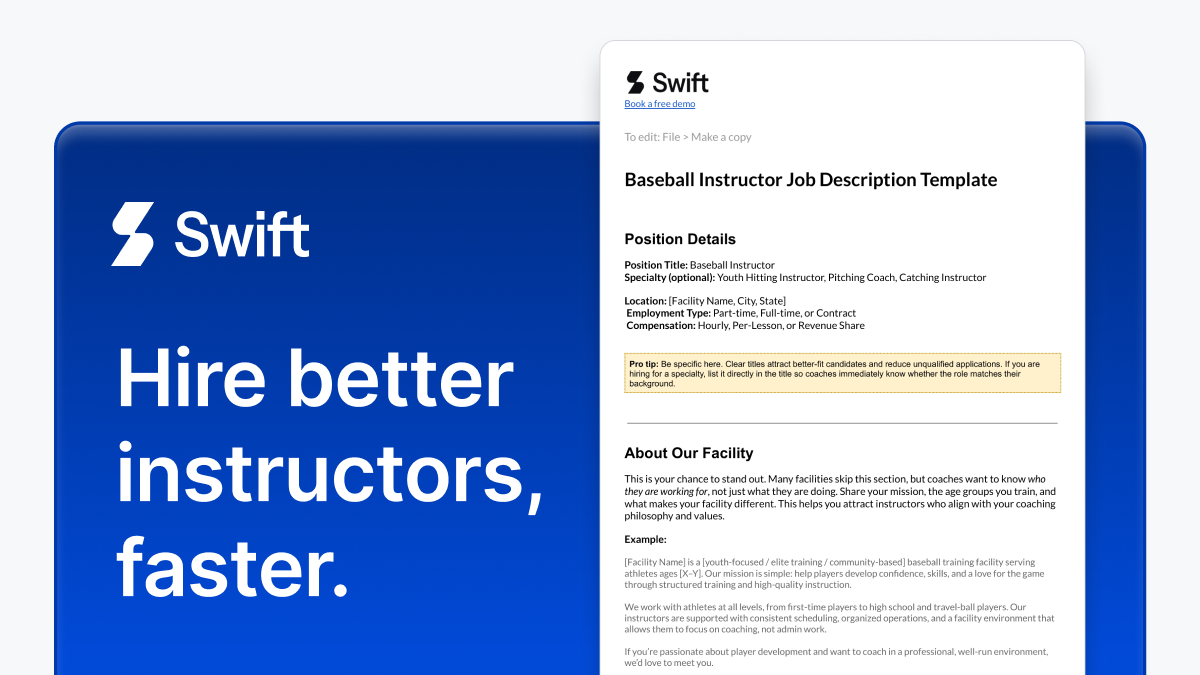
If you’re not sure where to start, we created a customizable Baseball Instructor Job Description Template designed specifically for baseball facilities.
This template will help you clearly outline job responsibilities, scheduling expectations, compensation structure, and required skills, while leaving room for you to showcase your facility's unique culture and perks.
Where to Find Qualified Baseball Instructors
Once your job description is dialed in, the next challenge is getting it in front of the right eyes.
If you are reading this, chances are your immediate network has already been tapped. Word of mouth is a great starting point, but it rarely scales.
Use the Right Platforms
LinkedIn can expose your facility to a wide audience, but it often produces a broad mix of applicants. You may find some strong candidates, but you will also spend a decent amount of time filtering through resumes that may not be baseball-specific.
Twitter/X
Many high-level baseball coaches and instructors never built a LinkedIn presence. Instead, they take to a platform like Twitter/X (or Instagram if they’re a younger coach) to share drills, breakdowns, and insights. As a facility owner, this platform is often more targeted than traditional job boards and allows you to engage with coaches already active in the game
Tap Into Baseball-Specific Organizations
Industry organizations can be one of your strongest recruiting tools. Many facilities using Swift rely on the American Baseball Coaches Association (ABCA) to source talent.
ABCA offers:
- A free baseball coaching job board
- Access to thousands of active coaches
- The largest annual baseball coaching convention
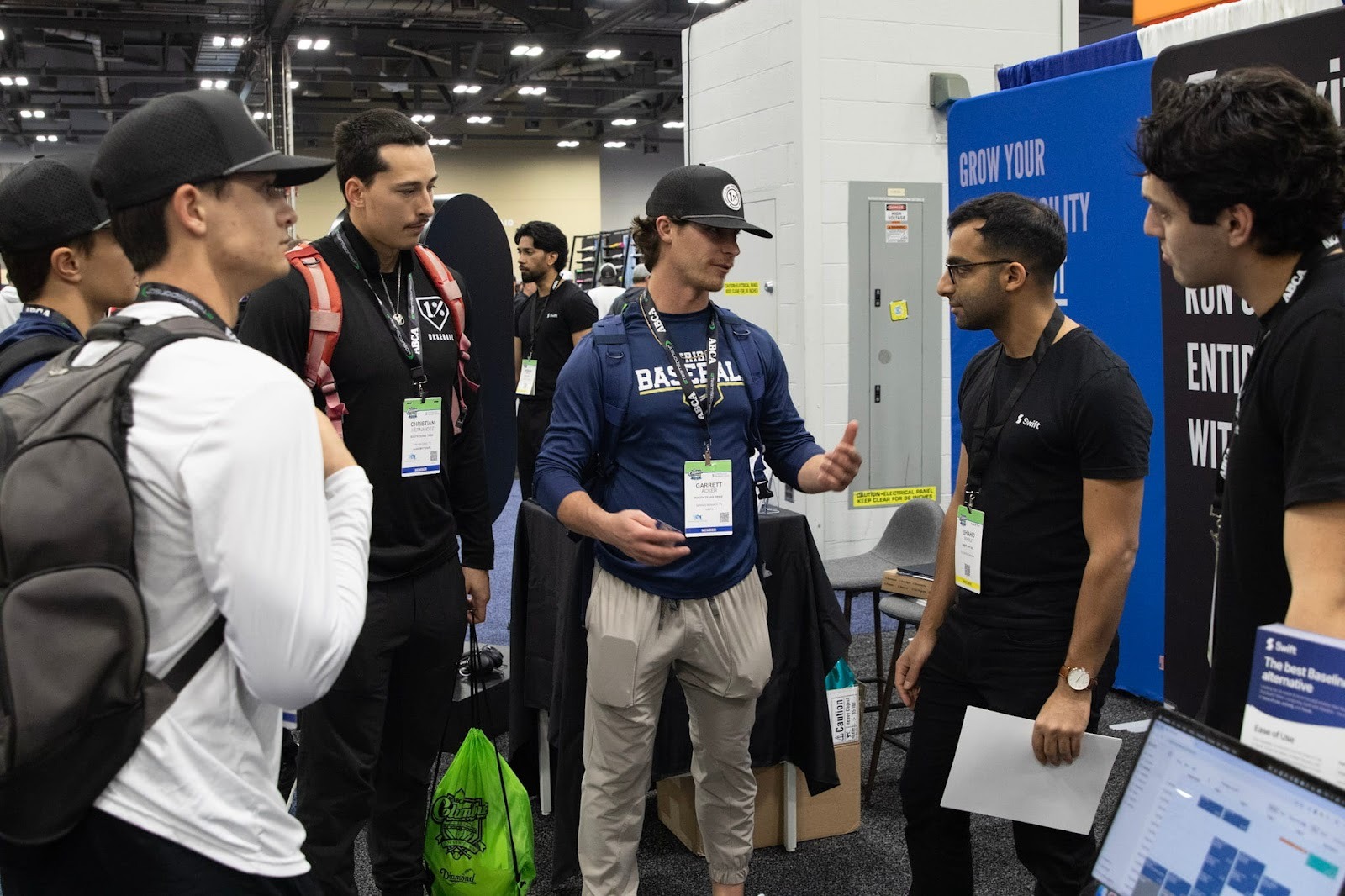
The ABCA convention is especially valuable for in-person recruiting. You can meet instructors face-to-face, talk shop, and get a real sense of cultural fit before making an offer.
Pounding the Pavement
Sometimes digital strategies are unsuccessful, and you’ll need to put some “skin in the game”. Especially for smaller communities, you can try any number of these more manual-intensive tactics:
- Posting job ads in local newspapers
- Posting flyers at local diamonds
- Networking within the community (attending local games, tournaments, etc.)
How to Attract Top Baseball Coaching Talent
Finding candidates is only half the battle. The best instructors have options and will compare your facility with others.
Beyond listing responsibilities and pay, your job description should answer one question clearly: why should a great coach work here?
Consider highlighting:
- The level of athletes' training at your facility
- Professional or collegiate players who train on-site
- Growth opportunities within your program
- Access to modern player development technology and training tools
Additional perks that attract high-quality instructors include:
- Relocation bonuses for out-of-state coaches
- Continuing education stipends
- Revenue sharing or commission on lessons
- Flexible schedules
- Remote coaching or virtual training options
- Opportunities to grow into full-time (if hiring for seasonal help)
Top instructors want stability, respect for their craft, and confidence that your facility is organized.
[[image-CTA]]
How to Evaluate Baseball Instructor Candidates
Once applications start coming in, your interview process matters.
Key factors to evaluate include:
- Willingness or ability to relocate
- The existing client base they can bring with them
- Comfort with technology and scheduling tools
- Certifications and playing or coaching background
- Communication style with athletes and parents
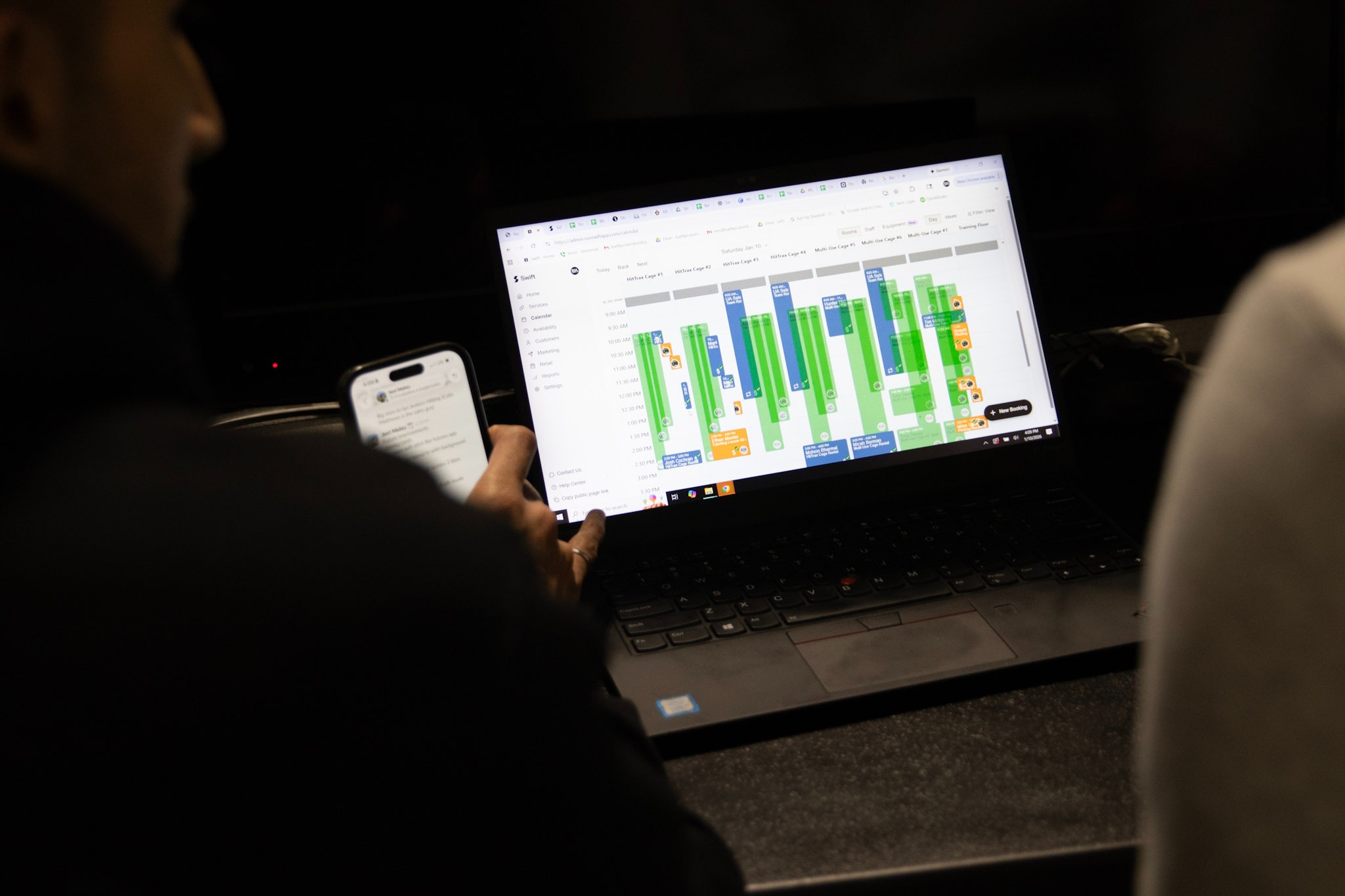
In modern baseball facilities, instructors must be comfortable using baseball scheduling software, managing bookings, and operating within a structured system. Coaching ability must be matched by professionalism in all aspects of their job.
Common Pay Structures for Baseball Instructors
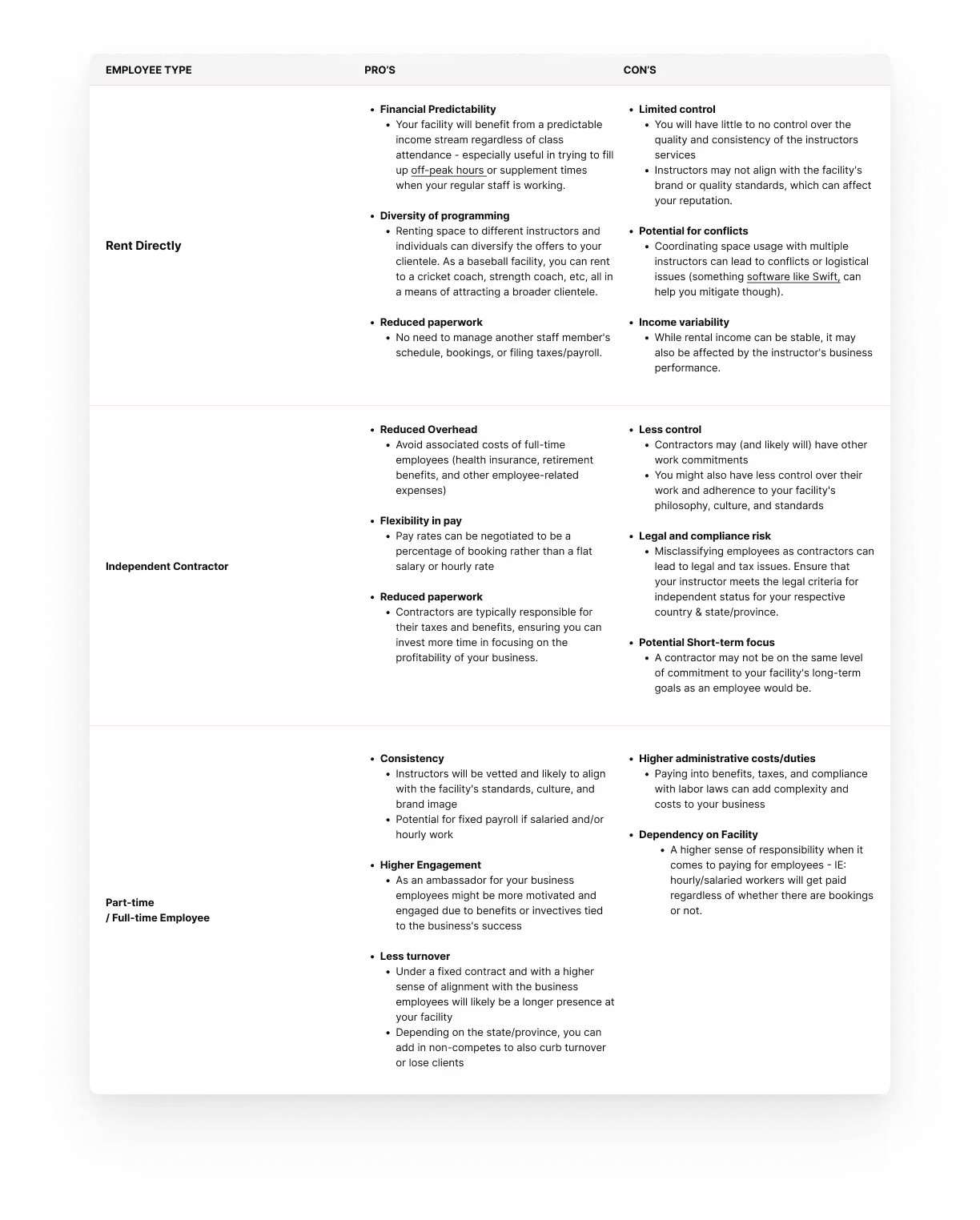
Most baseball facilities compensate instructors using one of three models.
1. Renting Space Directly
The instructor rents cages or turf at a discounted rate and manages their own clients. Payments go directly to the coach, and the facility avoids payroll responsibility. This model offers flexibility but less control.
2. Independent Contractors
The instructor operates as a contractor (a 10-99 worker in the US) and earns either a flat rate or a percentage of lesson revenue. Payments run through the facility, and payroll is handled internally. This is one of the most common models for growing facilities.
3. Part-Time or Full-Time Employees
Some facilities transition trusted instructors into hourly W2 (US) or T4 Canada) employees. This offers stability and stronger alignment but requires more payroll management and long-term planning.
Each model has financial and cultural trade-offs. As your facility scales, it is worth reviewing which structure best supports long-term growth.
With facility management software like Swift, you can set pay rates for each instructor, making your compensation structure flexible and tailored to every member of your staff. Whether you pay instructors hourly or on a commission basis, you can quickly run payroll reports to see exactly how much is owed to each coach.
Best Practices for Retaining Baseball Instructors
Instructor turnover is common, especially in seasonal or contractor-based models. Retention requires intention.
Build Real Relationships
Facility culture suffers when owners are invisible. Spending time on the floor or at the front desk builds trust and keeps leadership connected to daily operations.

Schedule Regular Check-Ins
Quarterly reviews or contract discussions help instructors feel valued and heard. Addressing compensation and growth proactively reduces the temptation to jump ship.
Support Work-Life Balance
Burnout is real. Offering paid time off, mental health days, and/or flexible scheduling helps instructors stay committed long term.
Common Hiring Mistakes to Avoid
Hiring Too Quickly
Busy seasons can create pressure to hire fast. Always factor in seasonality and run a cost-benefit analysis before adding staff.
Overpaying Without Visibility
Incentives matter, but so does maximizing profitability. Use reporting tools to track lesson revenue, instructor performance, and margins to ensure sustainability.
Micromanaging Schedules
Hiring instructors should reduce your workload, not increase it. With tools like Swift, you can assign custom roles and permissions so instructors manage their own availability while you maintain oversight.
Final Thoughts
Hiring the best baseball instructors is one of the most important decisions you will make as a facility owner. The right coaches elevate your brand, retain athletes, and drive long-term growth.
Clearer job descriptions, thoughtful compensation models, and organized scheduling systems will help you build a coaching staff that grows with your business.
If you are looking for help streamlining instructor scheduling, payroll visibility, and performance tracking, book a free demo and see how Swift can support your facility’s next phase of growth.