Having worked with hundreds of sports facilities, we see a lot of booking data, and for baseball facilities the winter pattern is clear. Swift's baseball & softball facilities in cold climates are 40-50% busier during winter months compared to the rest of the year. That's the stretch when it's still too cold to practice outside but parents want their kids getting reps before spring tryouts.
Demand doesn't spread evenly across your week either. Our data shows it piles into the early evening, while mornings and late nights stay quiet at the typical facility. That makes evenings the hours worth committing in advance.
We looked at how bookings move through the year to see when demand arrives. In this guide we'll go over what it shows, 5 programs you can use to sell the season in advance, and how to pick which one to start with.
These numbers cover baseball and softball facilities on Swift that experience real winters (snow, sub-freezing temps), so treat them as a starting point and check them against your own calendar.
Let's jump in!
TL;DR: How to Fill Indoor Cage Time This Winter
Fill off-season cage time by selling it in advance instead of waiting on walk-ins. At Swift's baseball and softball facilities, 58% of bookings start between 4 and 8pm, so lock those hours in with team contracts or development programs. Use clinics and camps for school breaks, and seasonal memberships and packages to sell the season before it starts.
Table of contents:
- How are Baseball and Softball Facilities Affected by Colder Weather?
- Use Team Contracts to Lock in Prime Time Revenue
- Sell Development Programs by the Season
- Fill Weekends and School Breaks with Clinics and Camps
- Sell a Seasonal Membership
- Pre-sell Packages Before January
- Get the Word Out Early
- Check Your Occupancy as the Season Goes
- Final Thoughts
- FAQ
How are Baseball and Softball Facilities Affected by Colder Weather?
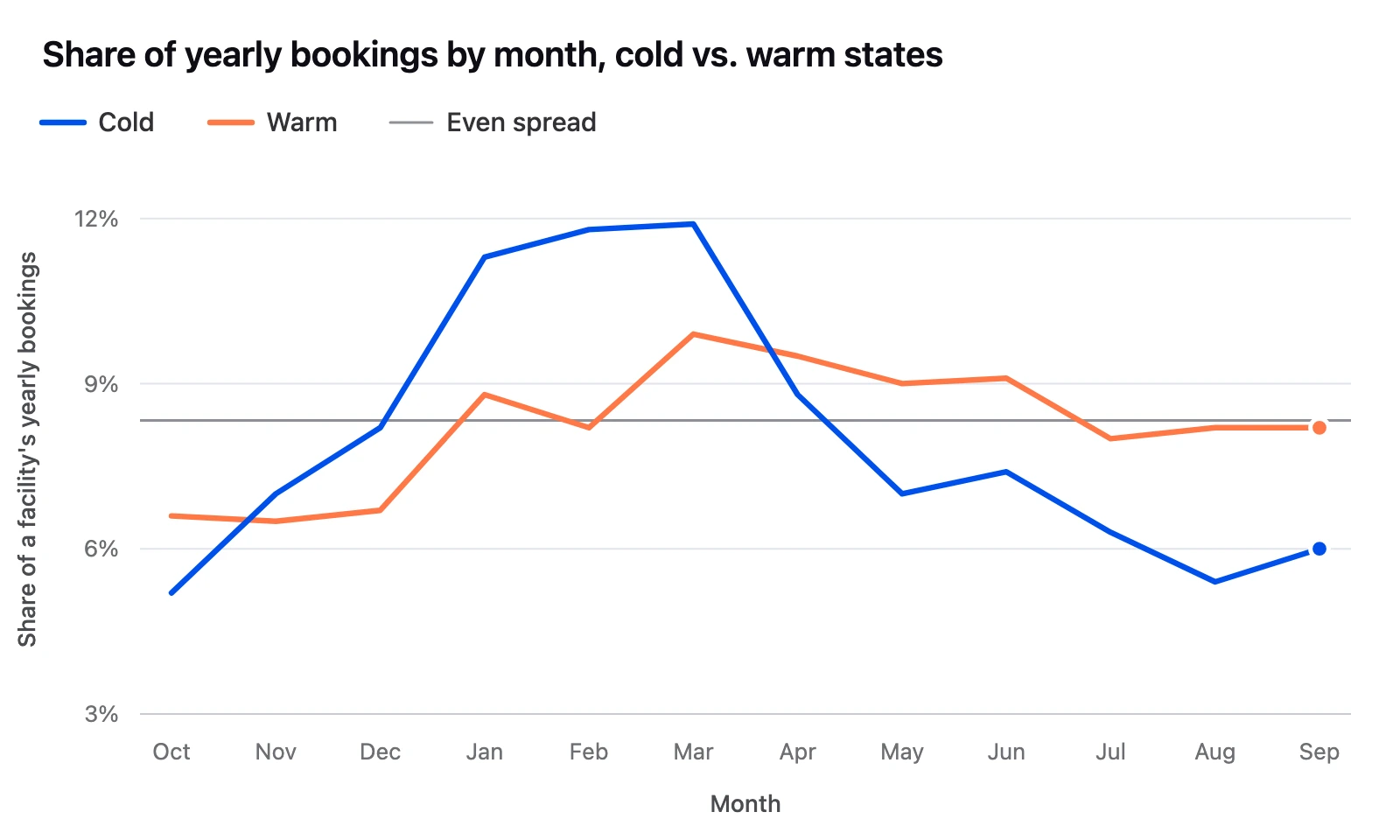
As temps drop and there's fewer hours of daylight, facilities start to see an uptick in the number of sessions being booked, well before the first snowfall of the year. For facilities in colder states, bookings start climbing in November when a typical facility will see about 17% more bookings than it did in September, with the peak running from January through March.
In warmer states the curve is flatter. Facilities in warmer climates do 8.2 - 9.9% of their year's bookings per month from January to March, much closer to the number you'd see if there was no spike at all, with their slowest stretch being from October to December.
Evenings carry most of the load. 58% of bookings start between 4 and 8pm, when school's done for the day and teams can practice. Weekends only hold about 30% of a week's bookings, which is close to what you'd see if there was an even spread across the entire week.
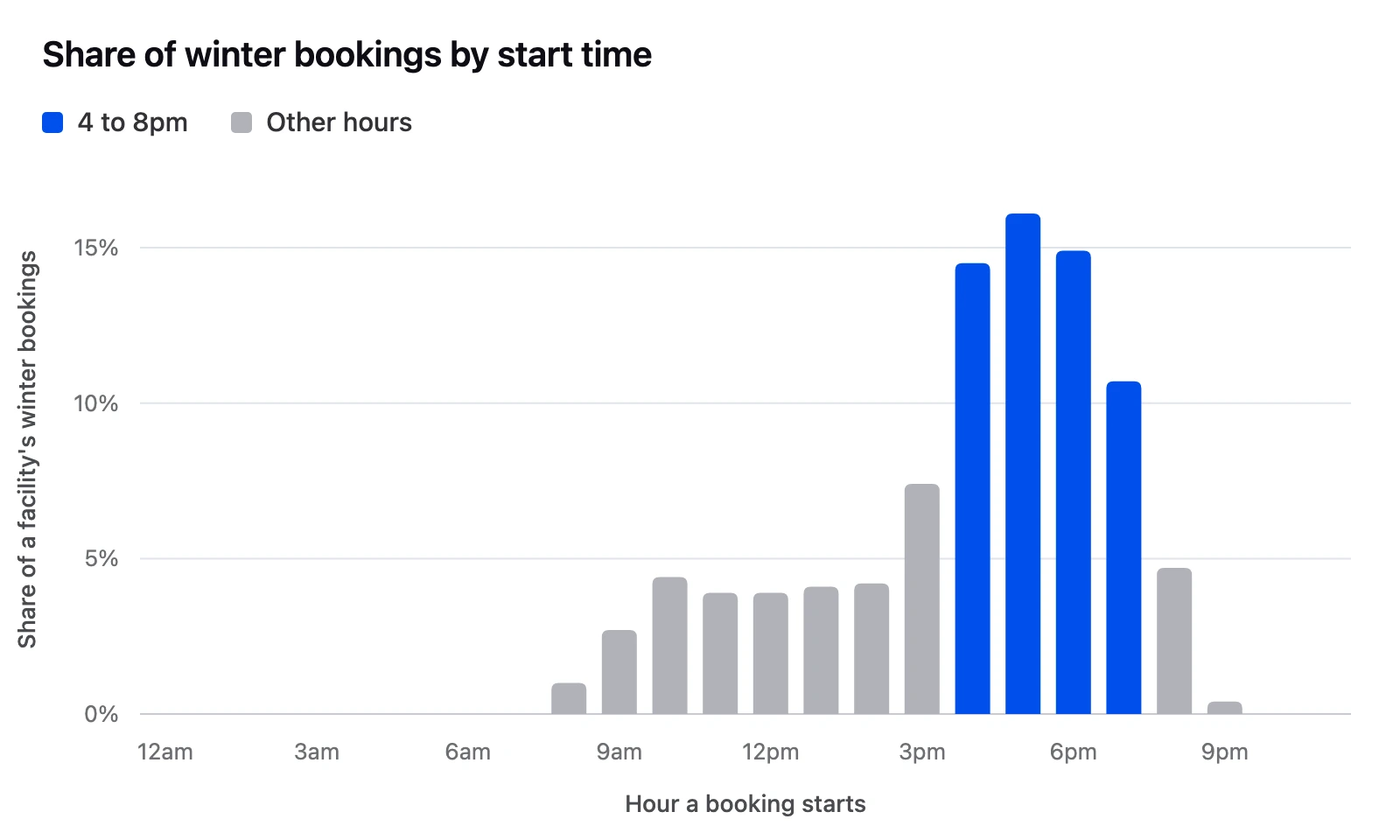
That concentration is why the first programs below go after evenings. An evening slot that sits empty costs you more than an empty slot at any other time, because it's the one you can sell at your full rate. For ideas on the rest of your week, see our guide to maximizing revenue in off-peak hours.
What this means for you:
- By October or November latest, you should have your Winter programs up and ready for purchase
- Evenings are your prime hours, so consider longer term programs and team contracts to lock in revenue
Use Team Contracts to Lock in Prime Time Revenue
Evenings are already busy, so it's tempting to leave them open for one-off rentals. The risk is an unsold slot in your prime hours.
Team contracts solve this. Book those slots once for the whole off-season and the revenue is locked in. Offer little league, travel ball, middle and high school teams the same night at the same time and the same couple of cages for around 10 weeks of 90-minute practices.
Those hours sell anyway, so price them at your full rate. If you want to reward a team for committing to the full season, offer them a discount and size it against what you'd realistically earn from those cages normally.
For example, a team taking 3 cages for 90 minutes at $50/hour is worth $2,250 over 10 weeks. If you'd normally expect to sell that slot about 9 weeks out of 10, week-to-week bookings would bring in around $2,025. A discount of up to 10% leaves you in the same place, with the whole season booked and paid for.
Swift makes the whole process easy by letting you block time off directly in the drag-and-drop calendar and sending invoices to team managers right from the platform.
If you'd rather earn more per cage and aren't worried about filling the spots, a development program is another way to use the same evening slot.
Sell Development Programs by the Season
Specialized development programs are another great way to lock in revenue during prime hours, and they let you charge a slight premium over team contracts because you're selling coaching, not just cage time. Like team contracts, they keep your evenings booked for the season instead of leaving those hours open for one-off rentals that can fall through.
Instead of a parent booking a lesson every week and deciding each time whether to come back, they sign up once for an 8- to 12-week program.
Build each program around one skill, then split it by age and skill level:
- Youth hitting
- Advanced hitting
- A high school hitting lab
- Pitching
- Catching
- Defense and fielding
Keep each group around 4 to 6 athletes meeting once or twice a week, which lets one coach work with the same families over the program's duration. Then tie the program to a goal parents care about, like being ready for spring tryouts or learning a new position, so everyone knows what the season is building toward.
Price the full program up front so parents commit once, and your coaches can plan a real progression from the first week to the last.
On Swift, parents register and pay for the whole program online and you can manage announcements or updates straight through email or notifications in your branded app. If you're adding coaches to run it, our guide to hiring baseball instructors covers what to look for.
Fill Weekends and School Breaks with Clinics and Camps
Weekends and school breaks are when families have the most free time. A one-day clinic or camp gives them a reason to come in instead of staying at home.
A few that work well for baseball and softball:
- A hitting power day
- A pitching velocity lab
- A catcher's clinic
- A base running and speed session
- Full-day camps during school breaks, like winter break, MLK Day and Presidents' Day
Keep each clinic to one theme and one age group, so it's coached well and parents know what their kid is getting. Cap the spots at what your coaches can actually work with, and turn on a waitlist. If the waitlist fills up, that's your sign to add a second date.
Done well, camps become a real revenue line. 413 Athletic Training Center, a baseball facility on Swift, added $10,000 in camp and clinic revenue in a year after switching from eSoft planner to Swift.
Parents will want to know what the day looks like, what to bring, who's coaching and what happens at pickup. Our free Holiday Camp Parent Handbook covers all of it, so you can adapt it instead of writing one from scratch.
Sell a Seasonal Membership
Seasonal memberships are a great way to have your athletes commit to an entire off-season worth of revenue, rather than just hoping they'll continue to come back over the whole off-season. For example, have an offering that runs from November 1 to March 31, so families commit once instead of deciding every month.
Bundle what your athletes use most, like cage hours, machine time, lessons and priority booking. Swift memberships include credits for the cage time, and you can bill monthly or even quarterly.
You can also sell early-bird memberships at a lower price to families who commit before the season starts, which rewards your most loyal customers and brings in revenue early.
For help setting the price, see our guide to baseball membership pricing.
P.S. If you’re an existing Swift facility — be sure to inquire about our in-house billing engine. It brings processing rates down to 2.9% from 3.5%. You can contact our support team at support@runswiftapp.com if you’d like to learn more or make the switch.
Pre-sell Packages Before January
Most bookings come close to the session. On Swift, 50% of rentals and lessons are booked within about 3 days, and 25% within about 17 hours. That makes it hard to know in October how busy January will actually be.
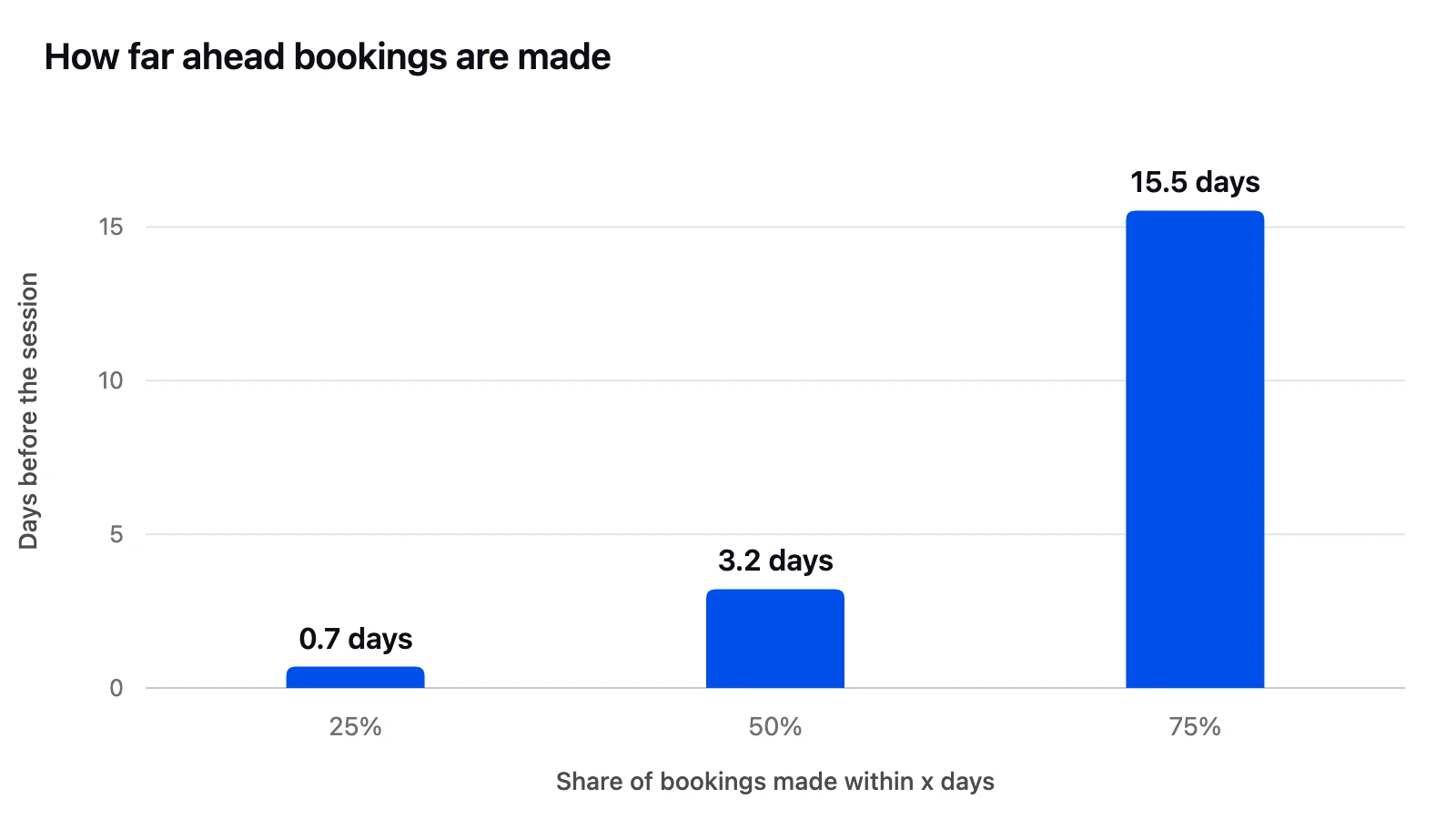
Selling packages early takes some of the guesswork out. A prepaid 10-pack or 20-pack of cage hours, sold in October and November, locks in revenue before the January peak, and your customers still have freedom to decide when to use it.
Price packages at a small saving per session compared with booking one at a time. An example being a 10-pack of cage time priced at $450, instead of the customer booking 10 separate sessions at $50 per hour. This nets them roughly a 10% discount. Set an expiry that covers the season so the time gets used this winter, and check your state's rules on prepaid expiry dates first. Set up your prime and off-peak hours as separate services and tie packages to the off-peak ones only, so a discounted pack never takes a slot you could sell at your full rate.
Customers buy and redeem packages online or in your app, and the credits come off automatically when they book. Expiry dates and usage restrictions are tracked in Swift too, so nobody can over-extend their benefits and you don't have to keep track by hand.
Get the Word Out Early
Every program above is easier to fill when your existing customers hear about it first. They're already familiar with your coaches and space so they're the ones most likely to book again.
Send past customers your full off-season lineup in October: memberships, packages, program start and clinic dates. Follow up as each one opens for registration as a gentle reminder.
Swift's email marketing feature makes this simple, since your customer list and booking history already live in the platform. send last winter's members the seasonal pass, past camp attendees the clinic dates, and families the new lesson offerings.
For last-minute openings, a push notification through your branded app reaches families on their phones where they're most likely to see it sooner rather than later. We compared the two in push notifications vs. email blasts.
Check Your Occupancy as the Season Goes
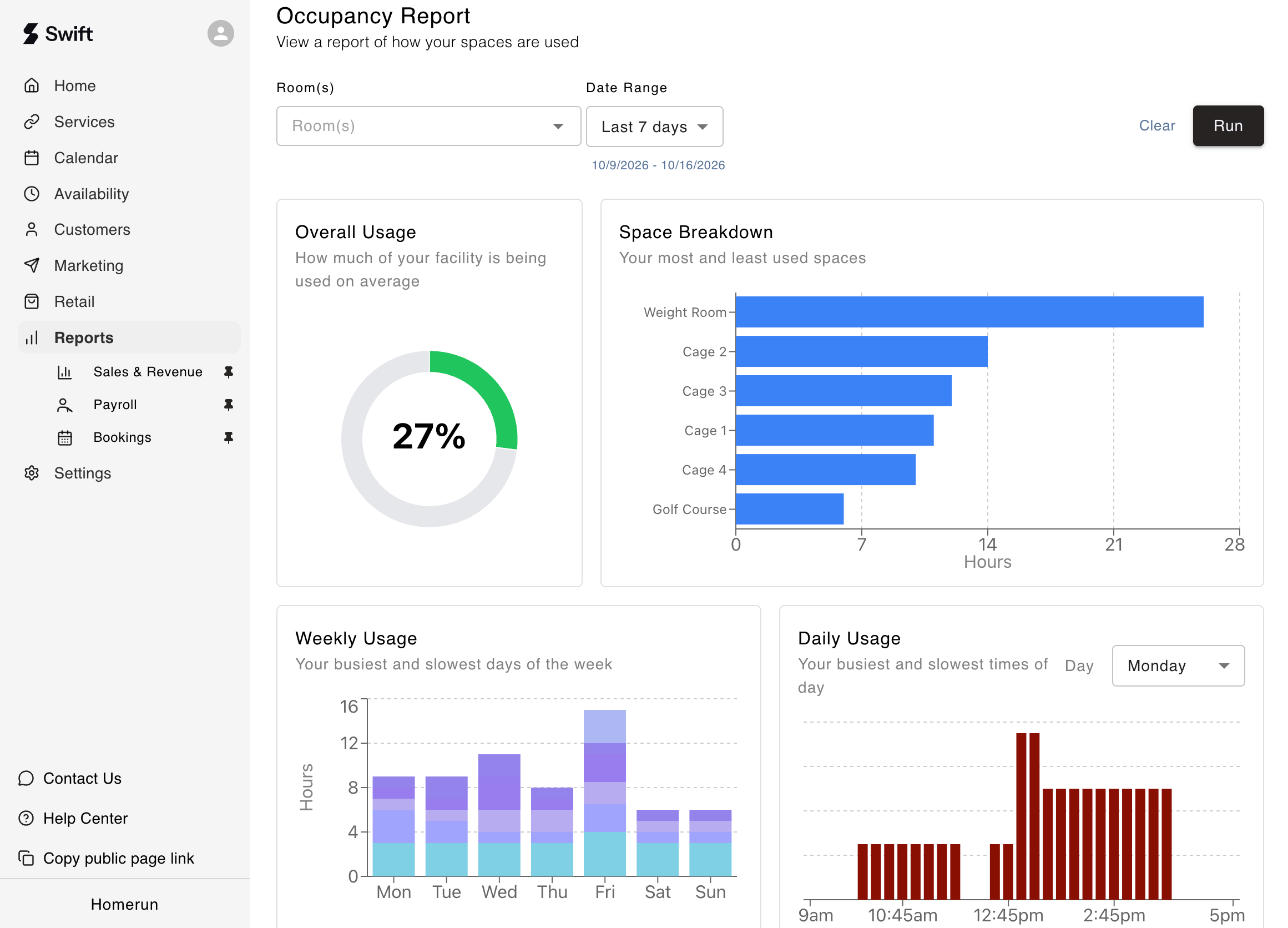
Once your programs are running, look at how full your cages are hour by hour, not just your total bookings for the month. A strong month can still hide the empty Saturday afternoon that happens every week in your pitching lanes.
Swift's occupancy report shows exactly that, so you can see which hours your programs are filling and which have room for rentals or team practices.
Check it once a month throughout the season. If a time slot is still empty after a program has run for a few weeks, try a different type of service offering before you drop the price.
Final Thoughts
Every facility's calendar is different, so start with the gap that's costing you the most:
- If your evenings are full, decide night by night: a team contract for certainty, or a development program if you can fill it. You can still leave some cages free for one-off rentals,
- If weekends or school break days are light, run one-day clinics and camps.
- If you want predictable revenue for the whole season, sell a seasonal membership.
- Whichever you start with, put packages and memberships on sale by November, before the January peak.
If you want to see how Swift handles the rest, book a free demo and we'll walk you through it.
FAQ
What are the best ways to increase registrations for off-season baseball/softball programs?
Start with the customers you already have. Email your full off-season lineup in October, with program start dates and clinic dates, then follow up as each one opens for registration. Use a push notification for last-minute openings. Families who already know your coaches and space are the most likely to book again.
What are good strategies for selling lesson packages to parents in the off-season?
Sell one program with a goal parents care about, like being ready for spring tryouts, instead of weekly lessons they have to rebook. Run it as an 8- to 12-week program for 4 to 6 athletes, price the whole season up front, and let parents register and pay online once.
How can I optimize revenue at my baseball facility during the off-season?
Protect your prime hours first. Price evening slots at your full rate, give teams only a modest discount for committing to the full season, and keep any discounted prepaid packs out of those slots. Then sell packages and seasonal memberships in October and November, before the January peak.
Does the off-season matter if my facility is in a warm climate?
Less, and on a different schedule. In our booking data, facilities in warmer states show a flatter year, with January to March close to an even share and October to December the slowest stretch. There is no winter peak to plan around, so build your program calendar from your own busy and slow months.